

In an HOA, a treasurer’s report gives the board and homeowners a snapshot of the association’s financial condition. It helps explain how much money the HOA has, how funds are spent, and whether the community is staying on budget. With a clear and organized report, treasurers can promote transparency and accountability.
What is an HOA Treasurer’s Report?

An HOA treasurer report is a summary of the association’s financial dealings. It serves to update both board members and homeowners, usually during board meetings or annual meetings. As the name suggests, the treasurer usually prepares the report, but they sometimes get help from a management company or an accountant.
The treasurer’s report covers a certain period. Most associations prepare the report monthly, while some also provide quarterly or annual summaries. Using these reports, board members can make more informed decisions.
The Importance of a Treasurer’s Report
The treasurer’s report helps the board monitor the association’s financial health. It also allows homeowners to understand how the association manages community funds.
With an accurate report, HOAs can identify financial problems early and track spending trends. They can also stay on top of the reserves, improve budget planning, and reduce the risk of fraud. All of these things support smarter decision-making, more transparent practices, and increased trust from homeowners.
What Does an HOA Treasurer’s Report Include?
The exact format of this report can vary by association. Still, most reports contain the same core financial information.
1. Operating Account Balances
The report should show the balances of the association’s operating accounts. These accounts cover daily expenses and recurring costs. Examples include checking accounts, savings accounts, and money market accounts. When the board knows how much cash is available, it can plan for ongoing operations.
2. Reserve Fund Balances
Reserve funds pay for major repairs and replacement projects. The treasurer’s report should clearly distinguish between reserve funds and operating funds. This section often includes the total reserve balance, reserve contributions made during the month, current reserve investments, and major reserve expenditures.
3. Income Summary

The report should summarize all the income the association received during the reporting period. Common sources of HOA income include regular dues, special assessments, late fees, interest income, amenity fees, and rental income. This section helps the board verify whether expected income matches actual collections.
4. Expense Summary
The expense section outlines where association funds were spent. Common expense categories include landscaping, utilities, insurance, maintenance and repairs, management fees, legal fees, and administrative costs.
Many reports compare the actual expenses against the approved budget. This can help the board identify overspending or spot unusual costs.
5. Budget Comparison Report
A budget comparison is one of the most important parts of the report. This section compares budgeted income and expenses with actual income and expenses.
The board can use this information to determine whether adjustments are necessary. For example, if the association spent more than anticipated on landscaping, the board can cut back on other line items or decide to raise dues a little to meet ongoing needs.
6. Delinquency Report
The treasurer’s report must include information about unpaid dues. This section generally shows the total delinquent balances and the number of delinquent accounts. Reports also classify each debt into aging categories, such as 30, 60, or 90 days past due.
Delinquencies directly affect the association’s cash flow. When too many owners default on their dues, the HOA can’t pay for necessary expenses. As a result, the board should monitor them closely to know when to make adjustments and when to pursue collection efforts.
7. Accounts Payable
Accounts payable refers to the association’s outstanding debts to other parties. The report typically shows unpaid vendor invoices, outstanding contractor balances, and even upcoming obligations.
With this report, associations can better understand their future financial commitments. This will help the board plan accordingly. Most HOAs opt to either raise dues, levy special assessments, or cut back on non-essential spending to meet future costs.
8. Bank Reconciliation Status
The treasurer should confirm that bank accounts have been reconciled properly. Bank reconciliation ensures that the association’s financial records match its bank statements. This helps the board verify the accuracy of transactions and identify errors or suspicious activity.
Reconciling bank accounts is a common financial control. If the actual amounts don’t match the records, it could be a sign of poor management, redundancies, or even HOA fraud.
9. Major Financial Updates

The report should also mention important financial developments that will affect the association. Common examples include large repair projects, insurance claim payments, loan balances, special assessment updates, and unexpected emergency expenses.
The board should understand any unusual financial activity occurring in the community. It is equally important to communicate to residents what these updates mean and how they will impact dues or other financial obligations.
When is the HOA Treasurer’s Report Presented?
The HOA treasurer usually presents the treasurer’s report during regular board meetings. In many communities, this happens monthly because the board needs current financial information to make decisions about expenses, collections, reserves, and projects.
That said, board meetings are not the only place where this report is provided. The report may also be presented at annual membership meetings, budget meetings, and special meetings that involve financial matters.
Additionally, many associations distribute written financial reports before the meeting. This way, board members have time to review them. Financial experts often recommend providing reports several days in advance.
As for homeowners, they can view the report at a meeting or request a copy from the board. Under D.C. Code Section 42-1903.14, condominium owners have the right to inspect certain association records, including financial records and budgets.
Even if an association isn’t legally required to share this report, it is still good practice. It’s a display of transparency and accountability. When owners understand what’s going on in the community, they are more likely to support the board’s decisions.
Sample of Treasurer’s Report
Download Your HOA Treasurer’s Report Template Here
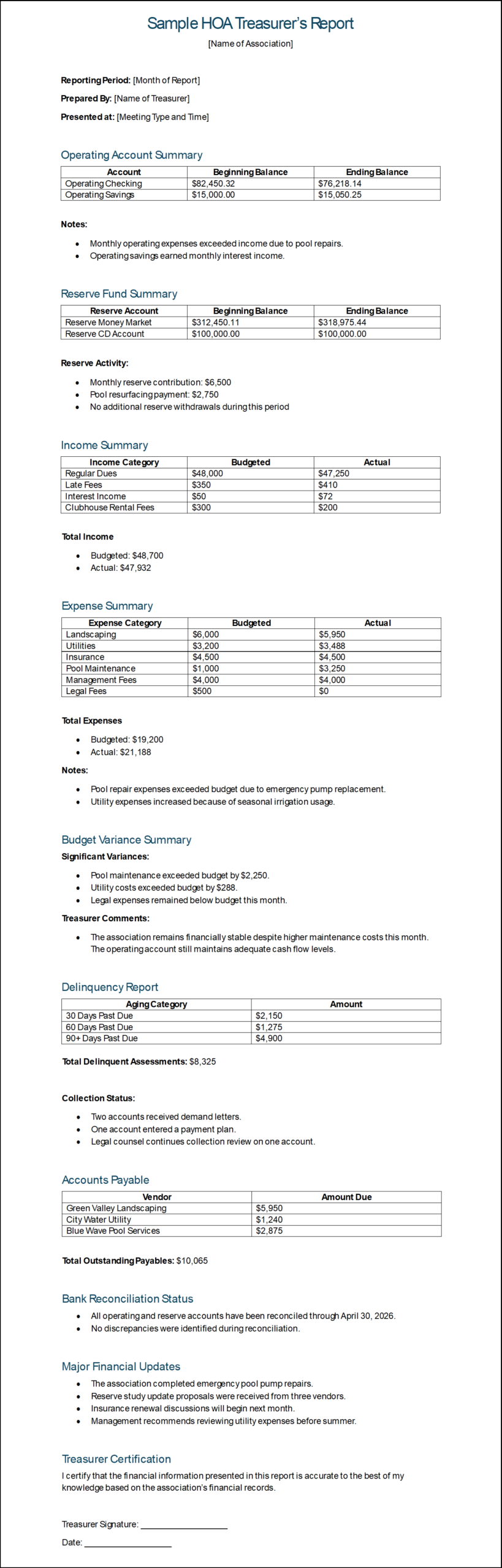
Download Your HOA Treasurer’s Report Template Here
A Comprehensive Financial Rundown
An HOA treasurer’s report can help the board track income, expenses, reserves, and overall financial performance. A complete report gives both board members and homeowners a better understanding of the association’s financial condition.
TNWLC offers HOA management services to communities in Washington, DC. Call us today at (202) 483-8282 or contact us online to get started!
RELATED ARTICLES:
- HOA Financial Management: A Clear Guide for Board Members
- The Importance Of Choosing Your HOA Auditor
- What Should A HOA Monthly Financial Packet Include?