

Property line disputes in HOAs can create tension between neighbors, homeowners, and the association itself. These disputes often involve fences, landscaping, driveways, pathways, easements, or other improvements near a boundary. Board members must understand how to resolve these disputes fairly.
Two Types of Property Line Disputes in HOAs
Property line disputes generally fall into two categories. The first involves two or more homeowners, and the second involves a homeowner and the HOA. It is important to understand the difference between the two, as the association’s role can vary by case.
Neighbor-to-Neighbor Disputes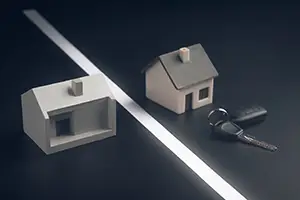
Neighbor-to-neighbor disputes occur when homeowners disagree about where one property ends and another begins. These disputes may involve physical improvements or the use of land near the perceived boundary.
For example, one homeowner may install a fence that another homeowner believes crosses the property line. A homeowner may also plant trees or shrubs too close to a neighboring lot.
The association’s governing documents may regulate some disputes, but not all. That said, the HOA generally does not have the authority to determine who owns a property simply because the community has rules about fences or landscaping.
Owner-to-HOA Disputes
Owner-to-HOA disputes involve disagreements between an individual owner and the association regarding property boundaries. These HOA property-boundary issues can be tricky to handle because common elements and lots may sit close together.
Pathways are one of the most common examples. An owner may believe a pathway belongs to their lot because it runs alongside or through their property. Yet, the HOA may have records showing that the pathway is a common element.
What Causes Property Line Disputes in HOAs?
Property line disputes can stem from a number of possible reasons, but some are more common than others. The most typical causes include:
- Unclear property records
- Old or inaccurate surveys
- Fences built in the wrong location
- Landscaping crossing perceived boundaries
- Driveways and pathways running close to property lines
- Easements
- Changes to community property (new acquisitions, improvements, etc.)
- Inconsistent community records
- Longstanding use of property
- Property transfers
- Development errors
Should the HOA Intervene in Neighbor Property Line Disputes?
Disputes don’t always call for HOA intervention. In fact, the association board should consider its role carefully before stepping into property boundary disputes between neighbors.
An HOA may have authority over fences, landscaping, architectural changes, or other improvements. That does not necessarily give the association authority to determine who owns disputed property.
In general, involvement may be necessary to prevent escalation. If there are any community rules that apply or could help resolve the dispute, the HOA should raise them. The board may also recommend that the neighbors enter alternative dispute resolution (ADR), such as mediation or arbitration.
Then again, the association can increase its liability exposure if it intervenes without sufficient evidence. Remember that it is not the HOA’s job to take sides. If it’s a private matter between neighbors, it is often best to leave it in their hands.
How to Handle Property Line Disputes in HOAs
Board members often struggle to handle HOA property line disputes. Here are general steps and strategies to help resolve them.
1. Determine Who Owns the Disputed Property
The first step is to identify who legally owns the disputed area. The HOA should review the recorded plat, the CC&Rs, deeds, easements, and other relevant property records. There is no room for assumptions here.
2. Review the Governing Documents
The governing documents may contain important information that can help resolve the dispute. These documents can identify common elements, limited common elements, maintenance responsibilities, and property rights. While they may not directly point to who owns the disputed area, they can shed light on the situation.
3. Obtain a Professional Survey
If the HOA can’t establish the boundary using existing records, experts recommend conducting a professional survey. This survey can help clarify if the disputed area falls under the HOA’s control or an individual owner’s. It is important to hire a licensed professional to perform this survey.
4. Identify Any Easements or Other Property Rights
Ownership is not always the only question on the table. An easement may give the HOA, an owner, a utility company, or another party certain rights over the property. The board should identify these rights before making any decisions.
5. Determine the HOA’s Responsibilities
After establishing the property’s boundaries, the board should determine the HOA’s responsibilities. For example, the HOA may be responsible for maintaining a common pathway. On the other hand, an owner may instead be responsible for maintaining landscaping that sits entirely within the owner’s lot.
6. Communicate the Findings Clearly
The association should provide affected owners with a clear explanation of its findings. This includes identifying the records reviewed, the association’s position, and other pertinent information. If the findings are inconclusive, the HOA should be transparent about it.
7. Give the Owner an Opportunity to Respond
Owners should have an opportunity to reply to the association and provide information. An owner may have a recent survey, deed, title document, easement, or other evidence that the HOA has not considered. These documents may provide further insight into the matter.
8. Consult the HOA’s Attorney When Necessary
Some boundary disputes involve complicated property laws. Board members should consider seeking legal counsel, especially when interpreting governing documents, property records, and the like.
Furthermore, an attorney can advise the board whether the dispute may lead to other legal challenges. If it comes to litigation, the attorney can represent the HOA.
9. Document the Decision
The HOA board should maintain records of everything, including surveys, correspondence, meeting minutes, legal opinions, photographs, property documents, and the decision. This will help create a paper trail, which may come in handy later on.
DC Laws on Property Line Disputes in HOAs
Washington, DC does not currently have a single statute governing all property line disputes in HOAs. That said, several laws may apply depending on the situation.
For example, DC Code Section 16-1113 talks about adverse possession, while DC Code Section 16-1103 addresses ejectment actions. These laws may come into play given certain circumstances. When in doubt, it is best to seek advice from a legal professional.
A Sound Recommendation
Property line disputes in HOAs can quickly escalate and turn heated. Board members must understand when to intervene and how to resolve them. Since most self-managed boards lack legal expertise, the best course of action is to hire an attorney or an HOA management company for guidance.
TNWLC offers HOA management services to communities in Washington, DC. Call us today at (202) 483-8282 or contact us online to start your journey!
RELATED ARTICLES:
- How to Handle HOA Disputes Step-by-Step
- How To Deal With Conflict Between HOA Board Members?
- Washington DC HOA Laws And Regulations