
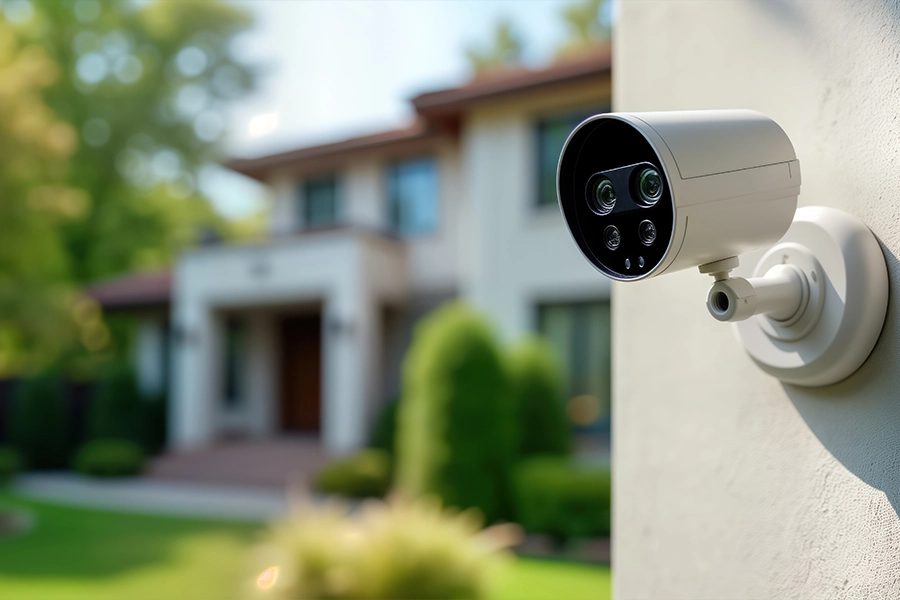
Believe it or not, HOA cameras can expose the association to liability. To manage risk effectively, it is important to strategically place these cameras, develop a camera policy, and clearly define the purpose of these recording devices. There are plenty of considerations to make, and boards can avoid issues by taking the right steps.
Are HOA Cameras Legal?
It is not uncommon to find surveillance cameras scattered across a planned community, whether it’s a single-family neighborhood or a condo building. Residents will typically find these cameras in common areas, leading them to question whether or not their association can install them in the first place. The answer depends on two things: state laws and the governing documents.
Some states regulate what boards can and can’t do, including the use of a homeowners association security camera. That said, most associations must rely on their own governing documents. The CC&Rs and bylaws, in particular, should clearly define whether the association can install and use cameras. Both board members and owners must refer to these documents to understand the authority of their association.
Strategies for Regulating HOA Community Security Cameras
Tempting as it might be, board members can’t just install cameras wherever they please and call it a day. They must make certain considerations to ensure effective surveillance and to limit the association’s liability. Here are the key tips when navigating the use of HOA security cameras.
1. Don’t Guarantee Security
First and foremost, associations must be wary of using the term “security camera.” This label suggests that the purpose of these cameras is to protect the community’s residents, but it can expose the HOA to risk and liability. For one thing, if a camera fails to ensure a person’s security, that person can take legal action against the association.
Security cameras serve the objective of deterring crime or recording it when it occurs. Residents may also mistakenly believe that someone is monitoring the feed at all times so that, if a crime does occur, they can call the police immediately. While security may be a concern for residents, associations don’t have an obligation to protect or keep people safe.
Instead, the board should refer to them as HOA surveillance cameras. The purpose of these cameras must be clearly outlined. Surveillance cameras monitor the community for rule violations and compliance. Clarifying this from the get-go will help reduce problems and confusion later on.
2. Establish an HOA Camera Policy
If an association installs cameras in common areas, it is imperative to create a policy to accompany them. Board members must establish a written policy that clearly states that the cameras are not intended to ensure anyone’s safety or security. This policy must also address storage, maintenance, and access to footage.
After enacting the policy, the board must distribute a copy to all members. Post the policy on the community website, include it in the newsletter, or send it via email. Ensuring all members are aware of this policy will set the expectations for camera use.
3. Understand Recording Laws
Association boards must understand their state’s recording laws before proceeding. The District of Columbia has a one-party consent law, which means that at least one party must consent to being recorded (DC Code 23-542).
That said, HOAs can generally record surveillance footage in public spaces without legal issues. Cameras can’t be installed or pointed at areas where people have a reasonable expectation of privacy. This includes bathrooms, changing rooms, and private homes.
Associations must post signs indicating that cameras are present and recording. These signs must be clearly visible and prominently placed.
4. Maintain Privacy
Privacy is of utmost importance when installing HOA cameras. Boards must be placed only in public spaces. Never point them at doors, windows, or any other place where people have a reasonable expectation of privacy. This includes bathrooms and changing rooms.
Many residents feel that cameras violate their privacy, especially in gated communities. Even the appearance of a privacy invasion can spark lawsuits and accusations. To avoid this, boards should address residents’ concerns and clearly label cameras when posted.
5. Regulate Access
Another key consideration is access. Associations must set parameters on who can access footage and for what purpose. It is also best to decide early on whether someone will regularly monitor the feed.
If a homeowner does need access to the recordings, the association should have a policy in place. What documents must the owner submit with their request? Can anyone seek access, or will the association require a subpoena? Moreover, once owners gain access to the recording, they might publish it online. The HOA should have regulations for that.
Still, the general consensus among legal experts is to limit access to the board and manager only. If a resident wishes to view or obtain a copy of a recording, they must provide a subpoena or a discovery request. The association can then work directly with law enforcement to provide the video.
6. Set Storage Rules
Beyond access, associations must decide where to store recordings and for how long. Some communities have servers that store footage physically, while others rely on a cloud-based system. Depending on state laws and the governing documents, recordings may be considered part of the association’s official records. In that case, there’s a certain timeframe by which associations must keep them.
Can an HOA Prohibit Owners From Installing Cameras?
Generally, associations can prohibit owners from putting up cameras in common areas. These are spaces accessible to everyone and controlled by the HOA. For private property, on the other hand, HOAs likely don’t have the power to ban cameras, unless the governing documents say otherwise.
That said, homeowners must still uphold a reasonable expectation of privacy. They must not point the cameras at neighbors’ windows, doors, or other places where privacy is expected. Moreover, associations may regulate the design and placement of cameras in accordance with architectural guidelines. In this case, owners will need to secure approval from the Architectural Review Committee first before installation.
A Slippery Slope
HOA cameras can go a long way toward ensuring rule compliance, but misidentifying their purpose can lead to legal issues down the line. To avoid liability, board members must clearly describe the purpose of these cameras and avoid labeling them incorrectly. Remember that HOAs aren’t obligated to ensure residents’ safety.
TNWLC offers both HOA management services to communities in Washington, DC. Call us today at (202) 483-8282 or contact us online to get started!
RELATED ARTICLES:
- Are HOAs Legal Or Just Overreaching? The Truth Behind HOA Authority
- What Is The DC Homestead Tax Deduction? Who Qualifies?
- Capital Lending For Cooperatives: How Does This Help Co-ops?